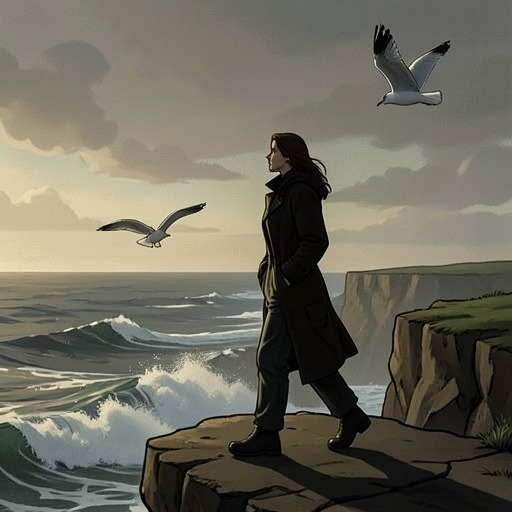
“Life is now, this minute”
The Salt Path“Life is now, this minute” is the narrator’s compact answer to a moment when a war memorial opens onto thoughts of death, social exclusion, and despair. Rather than remain inside that widening field of loss, she turns back to the immediate act of walking: the present, she insists, is all they have and all they need.
The phrase in context
The thought comes as the narrator and Moth pass a memorial to “The Fallen.” Too tired to take out her glasses and read the plaque, she cannot tell whether it commemorates people fallen in war or people fallen from a cliff. The uncertainty then turns inward: she imagines it addressing those who have “fallen from society, fallen from hope, fallen from life.”
From speculation to movement
The narrator settles on the likelihood that the memorial commemorates men who died in the wars. Their deaths, she reflects, left no opportunity for self-pity. She tightens her pack’s hip belt, shuts the door on what she calls the whining voice, and keeps walking. The aphorism follows this physical gesture: its insistence on the present is not detached reflection but a means of continuing through a difficult moment.
Meaning in the walk
The fuller declaration, “Life is now, this minute, it’s all we have. It’s all we need,” moves from a recognition of limited time to a practical claim about what is sufficient. Against the memorial’s dead and the narrator’s imagined figures fallen from hope or society, the act of walking restores attention to what remains available now. The phrase’s force lies in that turn: it does not resolve the losses behind the scene, but refuses to let speculation about them stop the journey.